


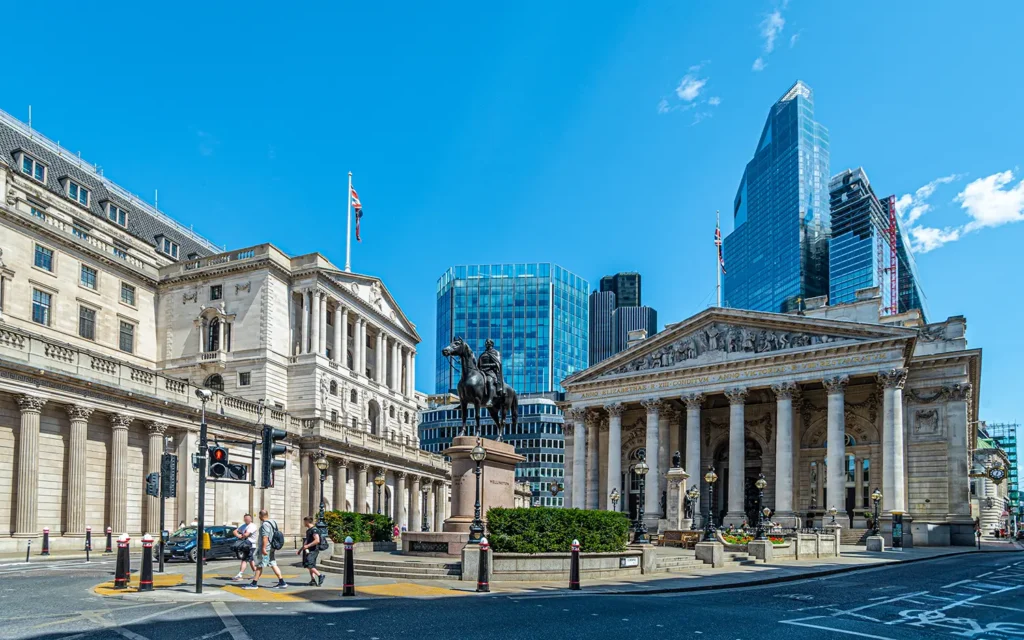
The latest Monetary Policy Committee (MPC) review has confirmed that the base rate is to be held at 3.75%. It was held at this level during the last review in July and this is now the sixth consecutive time. It was first reduced to this figure at the MPC’s last review of 2025, on 4th December.
Why has the Bank of England held the base rate again?
The base rate hold was expected despite inflation rising to 3.1% in the year to August. Although this was the second consecutive inflation increase, taking it further away from the Bank of England’s (BoE) rate of 2%, the decision to continue with a cautious approach was taken.
The labour market
One factor that’s considered when deciding whether to change the base rate is the labour market. If employment levels and wage growth are strong, this drives inflation upwards. If there’s poor wage growth and a high level of unemployment, this helps slow the rate of inflation.
According to the labour market data released on 15th September, the unemployment rate remained at 4.9% from May to July. Regular wage growth was almost at a 6-year low, with regular earnings increasing by 3.5% during this period. The low wage growth and steady unemployment rate figures signal that there’s unlikely to be any upward pressure on inflation. The UK economy as a whole grew by 0.4% in the same period.
Oil prices
Oil prices are surging due to the conflict in the Middle East and these are expected to have a continued impact on inflation. However, the UK economy is proving resilient to global disruptions at the moment.
The Autumn Budget
Another factor that has possibly led to the decision to hold interest rates again instead of increasing them is the upcoming Autumn Budget. The BoE may be waiting to see the outcome before making any decision that leads to an increase in rates.
Future rate increases
Whilst these factors can help explain why the current bank rate has remained the same, rates are expected to increase later in the year. The next review is in November when the BoE will have a clearer picture of the new fiscal rules, ongoing global pressures and changes in domestic events.
What does this mean for mortgage rates?
The anticipated rate increases in the latter part of the year have already been included in swaps data. Lenders use swap rates when pricing their fixed-rate products and, as such, have already begun increasing mortgage costs accordingly.
Major banks have increased their mortgage rates twice since the beginning of September based on these higher swap rates. Building societies have also begun changing their rates for a second time. Other lenders have had to withdraw selected products and replace them with new ones.
With rate increases predicted in early 2027, too, this could push fixed-rate product costs even higher. If you have a fixed-rate deal ending soon, it’s better to start looking at new deals sooner rather than later. Most lenders allow you to lock in a new rate 6 months before your deal is due to end. If a better rate becomes available after that and before your current one ends, you can change it to that one.
We can help you prepare for changing mortgage rates
Our mortgage brokers can review your current deal and the options available to you. We have access to the whole of the market, enabling our brokers to search through a wide range of products to find the most suitable one for your needs. Give us a call on 01322 907 000 for expert, impartial advice to help you choose the most suitable option for your circumstances.